


Legend of Elements
4.6808.00 Reviews
App Specs
- Version
- 1.0.23
- Updated On
- License
- Free
- Downloads
- 1,000,000+
- Developer
- Joy Nice Games
- Categories
- Role Playing
- Platform
- Android, iOS
Screenshots

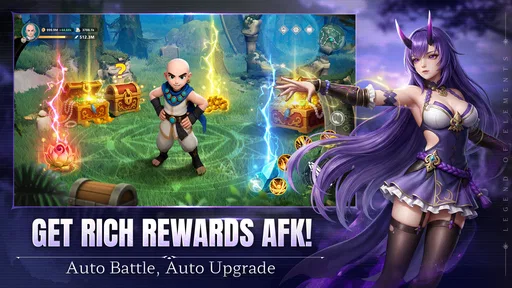
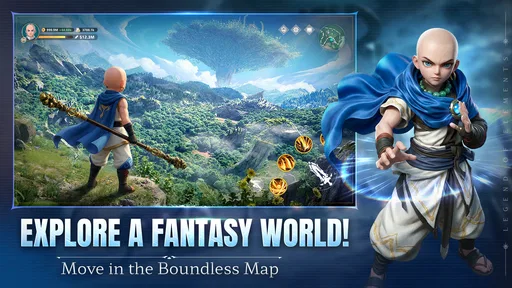
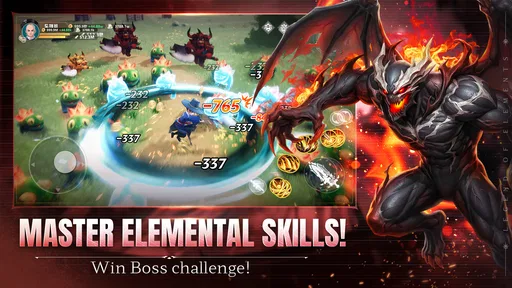


 Analysis by AppCompare
I tend to judge a role-playing game by more than its battles: can I read what is happening, find the next useful action, and enjoy a short session without feeling lost? That lens matters with Legend of Elements, a fantasy game from Joy Nice Games. Its colorful presentation makes a confident first impression, but the day-to-day experience also depends on how comfortable its busy screens and tap-focused play feel to you.
Who may enjoy this kind of fantasy RPG
I’d point this toward players who like a light fantasy adventure with character growth and elemental themes, but don’t necessarily want a dense role-playing system. The game’s progression is presented as approachable: you begin with basic abilities and gain more options as you advance, while the skill tree gives some room to shape a character without asking you to manage a huge web of choices. That can make it easier to dip in after work or between other plans than a sprawling RPG that expects you to study builds before you can make progress.
It may be less appealing if your favorite part of an RPG is deep tactical planning, a tightly documented ruleset, or a story you can follow without any action competing for attention. The published description frames the experience around elemental power and fantasy adventure, and the existing review describes battles, puzzles, quests, and character progression. Those ingredients may be enough for a relaxed player, but anyone looking for a very specific combat style should approach with an open mind rather than assuming the elemental theme means a complex simulation.
Readability and navigation in a busy game
The opening sequence is described as vivid and cinematic, and that visual energy can help a fantasy world feel inviting. It can also mean that the screen has a lot asking for your attention at once: characters, effects, scenery, and whatever action is underway. I find that kind of presentation most enjoyable when I can pause mentally, look around, and pick out the important prompt instead of trying to react to every animation. If you prefer restrained interfaces, the bright, animated style may feel more stimulating than calming.
A useful habit in any progression-heavy game is to separate exploration from planning. I’d take a moment between encounters to look over newly available abilities and decide what I want to try next, rather than making upgrades in a hurry while effects are still moving on screen. The review describes the skill tree as uncomplicated, which sounds promising for quick decisions; still, slowing down at those choice points is a practical way to avoid spending attention on menus while also trying to follow the story.
Motor and sensory considerations
The existing account describes controls built around swipes and taps. That kind of input is familiar to most phone players, but it does not suit every hand or every situation equally. If repeated gestures are uncomfortable for you, or if holding a phone steadily is difficult, a session may become tiring even when the rules themselves feel simple. I’d try a short play period first and pay attention to whether the gestures feel natural, rather than judging comfort from the opening alone.
The game’s sound and visual effects are part of its fantasy atmosphere, but they can also add sensory intensity during combat. Players who are sensitive to busy animation, sharp effects, or layered music may prefer to try it in a calm setting before settling into a longer session. I wouldn’t assume that a striking presentation is automatically comfortable for everyone; what feels immersive to one person can feel distracting to another.
Worth Reading Before You Choose

EA SPORTS FC Mobile 26 Is a Bigger Football Game, but It Takes Time

Flipboard Shows What News Apps Must Do Beyond the Feed

Switching to Android Auto Means Rethinking Your Driving Routine

Google Calendar Makes a Crowded Week Easier to Manage

Ludo King Makes the Most of the Minutes Between Plans

Baby Panda World Brings Quick Play to Modern Phones, but Its Game Library Feels Busy
When and where it fits
For an everyday test, imagine opening the game during a quiet break and playing until you reach a natural stopping point. That is a better first session than launching it while walking, riding in a crowded vehicle, or trying to keep one eye on another task. Battles and puzzles call for attention, and even a simple tap or swipe can be awkward when your phone is moving or your hands are occupied. I’d save the more involved parts for a place where you can focus and keep the screen comfortably in view.
It is free to download, which makes trying it a low-commitment way to see whether its art and role-playing loop suit you. The trade-off is that it offers in-app purchases, with individual items ranging from $0.29 to $299.99. I’d treat any purchase prompt as a reason to pause and decide what you actually want, not as a signal that spending is required to enjoy the game. If you prefer games with no optional spending at all, that distinction may matter more than the initial download price.
How it compares with other role-playing games
Compared with a traditional turn-based RPG, the experience described here sounds more immediately tactile: elemental actions and environmental interactions are part of the appeal, rather than only menus and long stat comparisons. Compared with a competitive action RPG, its story, side quests, and cooperative missions may give more reasons to explore beyond chasing a match result. That mix is a useful middle ground for someone who wants a fantasy setting with things to do but doesn’t want every session to be a contest.
There is a trade-off in that breadth. If you mainly want a carefully balanced solo campaign, social play may be beside the point; if you want a game built entirely around playing with friends, story and character progression may feel like detours. I’d choose it for the combination of fantasy exploration and growth, not for one narrow feature alone. Its reported average rating is 4.2 from around 30,000 ratings, and it has more than a million installs, so plenty of players have tried it, though popularity cannot tell you whether its particular pace and presentation will fit your taste.
The First Impression
So, when you first launch Legend of Elements, you’re greeted by an impressive opening sequence. The graphics are vibrant, and the sound effects give off this grand, mythical vibe. It’s like stepping into an animated fantasy movie. The art style is a blend of modern animations with a touch of retro charm. Props to the developers for nailing that perfect balance.
Gameplay Mechanics
Now, let's talk gameplay. The game combines elements of strategy, role-playing, and puzzle-solving. You're tasked with mastering the elements—fire, water, earth, and air—and using them to battle foes and solve intricate puzzles. The controls are pretty intuitive. It’s swipe here, tap there, and boom, you're a master of the elements.
What's cool is how each element interacts with the environment. For instance, using water to douse flames or employing earth to build barriers against enemies adds a layer of strategic depth. It’s not just about mashing buttons; you’ve got to think on your feet!
Character Development and Progression
Character progression in this game is just as rewarding as the gameplay itself. You start off with a basic set of skills, and as you progress, you unlock new abilities and powers. The skill tree isn’t overly complicated, which is a relief. It gives you enough freedom to customize your character without drowning you in options.
The game also throws in a few plot twists and side quests to keep you engaged. These aren’t just fillers; they actually add depth to the storyline and often reward you with unique items or abilities.
Community and Social Features
Here’s something that’s super neat—Legend of Elements has a strong community vibe. The multiplayer feature allows you to team up with friends or random players for co-op missions. It’s a blast strategizing with others and tackling challenges together. Plus, the community forums and in-game chat are bustling with tips, tricks, and friendly banter.
The developers also seem to be on top of their game (pun intended) with regular updates and events that keep the community buzzing. It’s refreshing to see a game that doesn't just rest on its laurels after launch.
Graphics and Sound
I can’t stress enough how gorgeous this game looks. The landscapes are detailed, and the character animations are fluid. The transitions between different realms and environments are seamless, making exploration a joy rather than a chore.
The soundtrack is another highlight. It’s both atmospheric and epic, perfectly capturing the essence of the game. Whether you’re in the middle of a heated battle or exploring a tranquil forest, the music enhances the experience tenfold.
Spending, device fit, and a sensible first session
The game is free and rated Everyone 10+, which makes it approachable for a broad audience, though parents may still want to consider the fantasy combat and optional purchases when deciding whether it suits a younger player. It was released on September 19, 2025, and version 1.0.19 supports devices running Android 5.1 or later. For me, the age label is a starting point, not a substitute for considering a child’s comfort with battles, chat, and spending prompts.
My practical advice is to treat the first session as a test rather than a commitment. Notice whether the opening’s effects are comfortable, whether you can follow the action at your usual screen brightness, and whether the controls feel manageable in your hands. If the game clicks, make a small routine of checking progression choices between encounters. That helps keep decisions deliberate and makes it easier to stop at a natural point instead of tapping through menus while distracted.
Players who enjoy teamwork have another reason to try it: cooperative missions can turn a solo break into something social. But co-op is not automatically the better way to play. If you want to move at your own pace or focus on plot details, a solo session may be a better fit; if coordinating with strangers is stressful, you do not need to make community interaction the center of your experience. I’d also avoid treating chat as essential when all you want is a quiet fantasy game.
Remaining barriers and practical trade-offs
There are limits to what an appealing visual style and straightforward gestures can solve. A player who needs larger text, reduced motion, precise control remapping, or a fully quiet presentation should check the actual on-device experience before investing much time. I can’t infer those options from the game’s look or its basic control style. That uncertainty is a real consideration for anyone whose comfort depends on a particular display or input setting, and it is a good reason to test rather than assume.
Likewise, role-playing games can ask for sustained attention even when individual controls are simple. Following a puzzle, remembering an ability, or cooperating during a mission may be harder when interruptions are frequent. If your available play time is fragmented, look for a clear pause or stopping point before you start a demanding encounter. The value of that approach is not just convenience: it prevents a short session from turning into a frustrating one because you had to leave in the middle of something that needed focus.
As a free-to-start game, it also asks players to make their own boundaries around optional spending. With item prices spanning from $0.29 to $299.99, I would be especially cautious about purchasing impulsively or letting a younger player browse without guidance. Anyone who wants a one-time purchase with no in-app transactions may be happier with a different RPG. The game’s accessible entry point is appealing, but it does not remove the need to decide how optional purchases fit your budget.
The Final Verdict
So, what’s the bottom line on Legend of Elements? If you’re a fan of strategy games with a rich storyline and dynamic gameplay, this one’s a no-brainer. It’s engaging, challenging, and visually stunning. While there are some in-app purchases, they’re not intrusive, and you can definitely enjoy the game without spending a dime.
It’s one of those rare finds that captivates you from the get-go and keeps you coming back for more. Whether you’re a casual gamer or a hardcore strategist, Legend of Elements is well worth the download. So go ahead, unleash your inner elementalist, and dive into this enchanting world. Trust me, you won’t regret it!
My inclusive verdict
My recommendation is strongest for someone who wants a colorful elemental fantasy, approachable character development, and the option to play cooperatively without making competition the whole point. It is less convincing for players who need a quiet, low-stimulation presentation, specific accessibility controls, or a spending model with no optional purchases. The game’s bright scenes, gesture-based play, story tasks, and social layer each suit some contexts better than others; giving yourself a short, low-pressure trial is the clearest way to find out which side you fall on.
Overall, I see it as a potentially enjoyable role-playing choice rather than a universal fit. The appeal is in mixing progression, elemental interactions, and a lively fantasy atmosphere; the caution is that comfort and value depend on your own sensory needs, available attention, and approach to purchases. If those trade-offs feel acceptable, I’d give it a try. If they don’t, a quieter, simpler, or one-time-purchase RPG may be the better companion for your play style.
Pros
- Engaging storyline with rich lore.
- Smooth and intuitive controls.
- Stunning graphics and animations.
- Wide variety of characters to unlock.
- Regular updates with new content.
Cons
- In-app purchases can be pricey.
- Requires constant internet connection.
- Occasional lag in multiplayer mode.
- Limited customization options.
- Energy system restricts play time.
FAQs for Legend of Elements
What is the main objective of Legend of Elements?
Legend of Elements is a strategic role-playing game where players embark on an epic journey to master the elements. The main objective is to collect elemental heroes, build a formidable team, and engage in battles against various enemies. The game combines tactical decision-making with immersive storytelling to create a captivating experience.
Is Legend of Elements free to play?
Yes, Legend of Elements is free to download and play on both Android and iOS platforms. However, it includes in-app purchases that allow players to buy items, boosters, or additional currency. These purchases can enhance gameplay but are not necessary to enjoy the full game experience.
What are the system requirements for Legend of Elements?
To ensure optimal performance, Legend of Elements requires Android 5.0 or higher and iOS 10.0 or later. It’s recommended to have at least 2GB of RAM and sufficient storage space. A stable internet connection is also necessary for certain features such as multiplayer modes and updates.
Does Legend of Elements support multiplayer gameplay?
Yes, Legend of Elements offers multiplayer gameplay options. Players can join guilds, participate in PvP battles, and engage in cooperative missions with friends or other players worldwide. This feature adds a competitive and social aspect to the game, enhancing the overall experience.
How does the elemental system work in Legend of Elements?
The elemental system in Legend of Elements is a core gameplay mechanic. Each hero and enemy is associated with a specific element, such as fire, water, earth, or air. These elements interact with each other in a rock-paper-scissors manner, where certain elements have advantages over others. Understanding and utilizing these interactions is key to strategic success in battles.


